Thursday, July 5, 2012

Una sugerencia de lectura, El Complot de Las Flores

Ya he comentado que crear un plan de lectura es esencial para construir un programa bilingüe con perspectivas de futuro. También he comentado en entradas anteriores la importante producción en español de literatura infantil y juvenil que puede ser una de las mejores herramientas de trabajo para fomentar la lectura entre los estudiantes.

Hoy me gustaría recomendar un libro que aparece en la colección Barco de Vapor, de la editoral SM. De hecho, esta novelita ganó el premio de la colección en 2003. La autora argentina Andrea Ferrari muestra de una manera muy divertida la repercusión que la llegada de una familia de Buenos Aires produce en una pequeña comunidad de la Patagonia  desde el punto de vista de dos personas, la hija adolescente de la familia recién llegada, Mara Herrera, y una vecina que lucha por salvar el pueblo desde el Grupo de Rescate, Ángeles Espinoza.

Las Flores necesita que sus habitantes no abandonen el pueblo. El grupo de rescate, tras mucha deliberación, prepara su plan de rescate. Tratarán de convencer al anciano Alfonso Vera para que asfalte la carretera y así los turistas puedan retornar como antaño. Para ello inventan la historia de que su nieto, Santiago, sale con Mara Herrera, la chica recién llegada y por tanto no abandonará el pueblo como su abuelo teme va a suceder. A partir de ahí se suceden los equívocos, las situaciones cómicas y el desenlace no es probablemente el esperado.

El libro transmite también importantes valores como la cooperación, la lucha por preservar las tradiciones etc. Es de fácil lectura y, como no podía ser de otra forma, presenta localismos del habla argentina que habría que mencionar antes de empezar la lectura.

Blog de la autora


Saturday, June 23, 2012

Scaffolding the language

During the last ISA seminar celebrated in Calgary in 2011 several important issues about bilingual education came out. During her presentation, Dr. Myriam Mett mentioned her experience with bilingual schools in the USA. Students were very strong in the lower grades of their education and were able to engage in conversations but the same students in junior high school seemed to have forgotten all their Spanish. She mentioned at this point the importance of reading for building up the students linguistic capacity. I must say that I agree a 100% with this statement and in this blog I have been suggesting different novels and short stories that can be very useful in a Spanish bilingual program.

In the same seminar, another keynote speaker, María Jesús Frigols, introduced two important concepts which are related to the problem I am talking about: Scaffolding and Cognitive input versus Language input. Professor Frigols stated the importance of scaffolding the language input students acquire in the subjects areas taught in Spanish. For this reason, it is essential the collaboration between the subject areas in Spanish and Spanish language arts, so students get the necessary input to face in the target language the more and more demanding cognitive input.


Extracted from this link

In my opinion, one of the reasons why a significant number of students drop from the program in junior high school has to be with what we are talking about: without building up the linguistic capacity, students cannot face the more cognitively demanding subject areas. Schools need, in my opinion, a reading plan from the lowest grades up to high school and introduce the concepts of scaffolding the linguistic input, which implies the collaboration and coordination between teachers. I know that we are too often overwhelmed by work but this is a key factor to a successful Spanish bilingual program.

Wednesday, April 11, 2012

Laura Gallego, a young writer


I have already spoken about the young Spanish writer Laura Gallego. She is 34 and she has already published over 20 books for children and young people. Most of her books have been best sellers in Spain and other Spanish speaking countries but also in many other places: her books have been translated into 15 different languages, among them English and French.

Her biggest success, the trilogy Memorias de Idhún (The Idhúns Memories) is set in a fantastic medieval world called Idhún, a land with three suns and three moons. The plot centers around an old prophecy which predicts than only a dragon and a unicorn could save that world from Ashran, the Necromancer's evil plans. The plot is very entertaining, with many characters that endure numerous adventures. It can be hard for readers with not enough command of Spanish.


Fortunately, there is also a comic version of the the trilogy and this can be easier to use.


The seventh comic has just come out. The Idhúns Memories has been a best seller in Spain with almost a million copies sold . A more important reason to read the books is the fact that young people highly recommend them. They can be a very good tool to engage students into reading in Spanish.
More information about the author in her website:

Monday, April 9, 2012

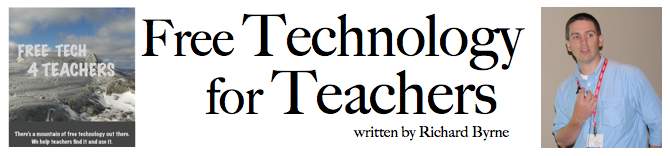
Free Technology for Teachers


Free Technology for Teachers is the name of a blog written by Richard Byrne. The blog is very interesting and provides lots of useful information about how to teach using new technologies. As the author states: "free resources and lesson plans for teaching with technology."

I particularly like the tutorials on how to get the best out of different online resources such as google docs or how to start an online teaching project using free tools available online. It is not strictly a blog for language teachers but it can be a great resource for everyone involved in a bilingual program, especially to build an online learning environment that can be used to do projects with other schools.

The writer twits all the new information regularly so it is very easy to keep updated.


Free Technology for Teachers

Saturday, March 24, 2012

¿Por qué leer literatura infantil y juvenil?

Esta entrada la vamos a hacer en español. A través de este vídeo donde diferentes autores de literatura infantil y juvenil nos hablan de las razones para leer literatura para jóvenes, de todo lo que puede aportar este tipo de libros a los jóvenes lectores. También mencionan su obra favorita (donde destaca y de qué manera La Historia Interminable) y a través de este vídeo conocí la revista de literatura El Templo de las Mil Puertas.


Los autores destacan la capacidad de la literatura juvenil de crear lectores entre los jóvenes y de fomentar la imaginación pero también de proporcionar el placer de saborear una buena historia. Todos alaban la labor de la revista arriba mencionada. Detrás de ella está el joven autor Javier Ruesca, que ha publicado ya varios libros. De él y de Laura Gallego, que aparece en el vídeo, hablaremos pronto y haremos reseñas de sus libros. Hay muchas razones para hablar de estos dos jóvenes autores pero la principal me la dieron mis estudiantes. Les pregunté qué libros en español recomendarían ellos a lectores canadienses que estudiaran en una ISA. En un primer momento optaron por los clásicos El Lazarillo, La Celestina y El Quijote. Les dije que era su elección, no lo que ellos pensaban que yo pudiera elegir. Inmediatamente nombraron a estos dos jóvenes escritores. Y se trata de opiniones muy cualificadas.


banner

Volviendo a la revista,  El Templo de las Mil Puertas nos da una visión amplia de la literatura infantil y juvenil en español y  de autores de muchos otros países. Autores consagrados, pero también noveles y autores olvidados. Hay enlaces a entrevistas con muchos de ellos y los lectores pueden participar enviando sus críticas y opiniones. Una gran fuente de información, al alcance de todos y con muchas referencias a las nuevas tecnologías, el autor tiene su propio canal de youtube y a través de él también contacta con sus lectores.